
GEO Promotion
We adapt your site to the logic of AI search so that ChatGPT, Google AI Overview, Gemini, Perplexity and Copilot cite your brand in their answers — not just add a link in the results. GEO (Generative Engine Optimization) combines technical, content, and reputation work aimed not at ranking in traditional search but at appearing inside the generated answer. First visibility signals appear in 2–3 months, full effect within 6–12 months. Starting from $500/month. Start with a free AI-readiness audit.
How GEO differs from SEO and how they work together
GEO promotion is the optimization of content and site signals so that generative search systems can correctly read, summarize, and cite your pages. SEO and GEO solve different problems. Search optimization helps a page enter traditional search results and compete for top-10 positions. GEO works differently: it builds signals that ChatGPT, Gemini, or Google AI Overview use to select a source for citation in their answer.
Position in search results
Citation in AI answers
In practice these approaches reinforce each other. A strong technical foundation, quality content, and correct semantics simultaneously improve Google rankings and increase the chance of appearing in AI answers.
Classic SEO builds positions in search — GEO builds citation in generative answers.
Why businesses need GEO right now
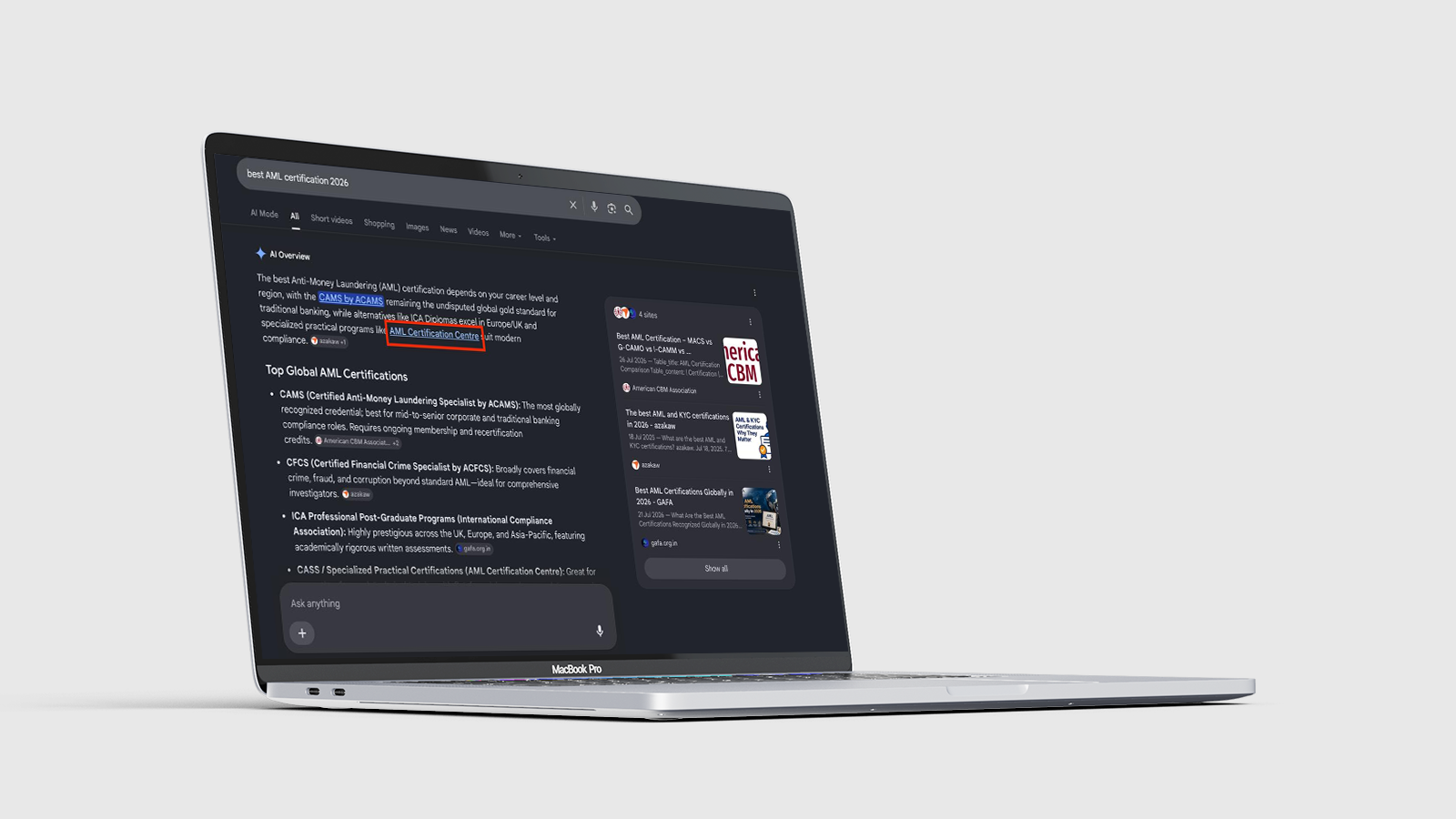
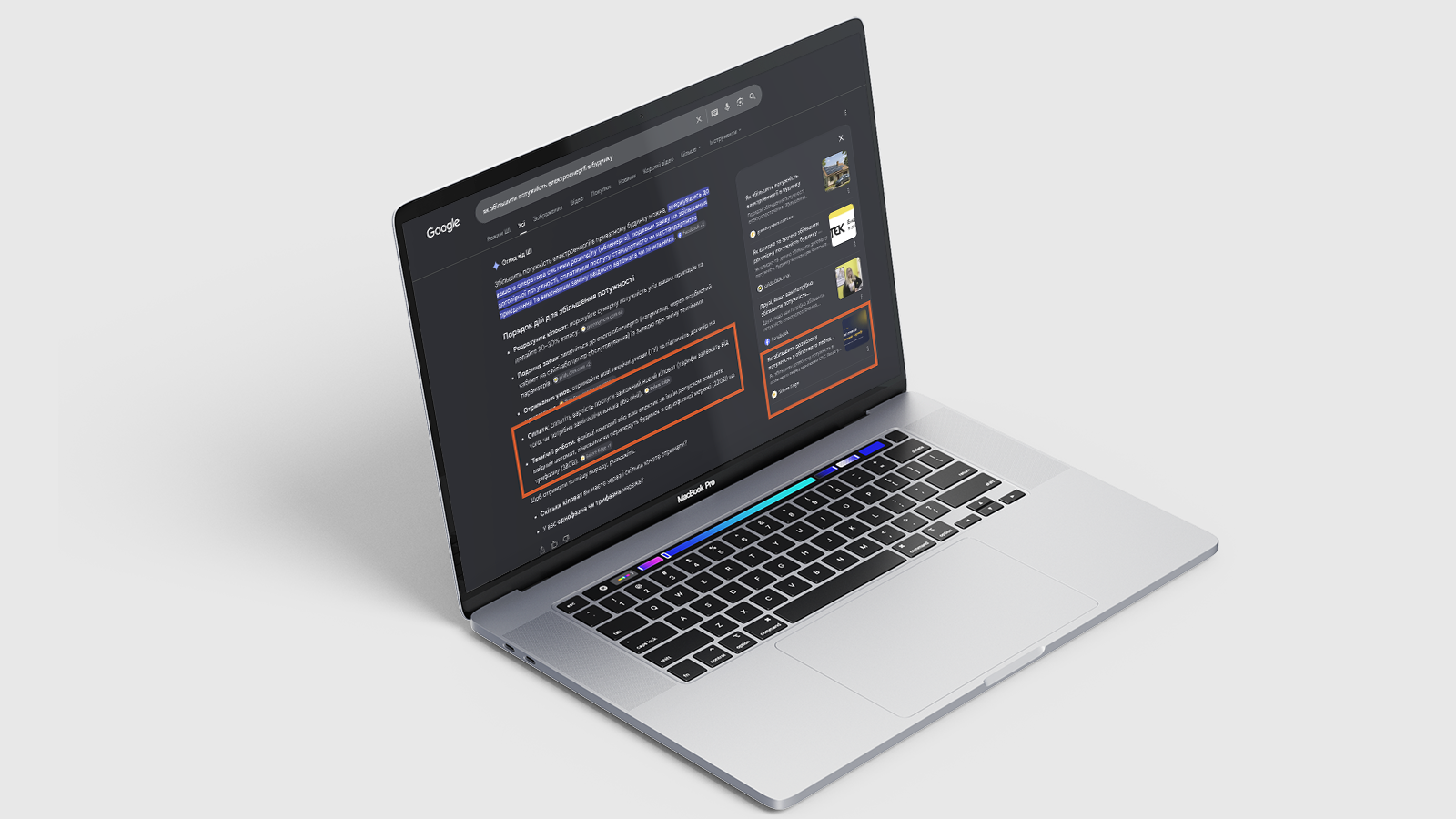
Some users no longer open dozens of tabs — they ask ChatGPT or Gemini and get an answer immediately. If your brand is not in that answer, it is invisible at the moment the person is forming their decision.
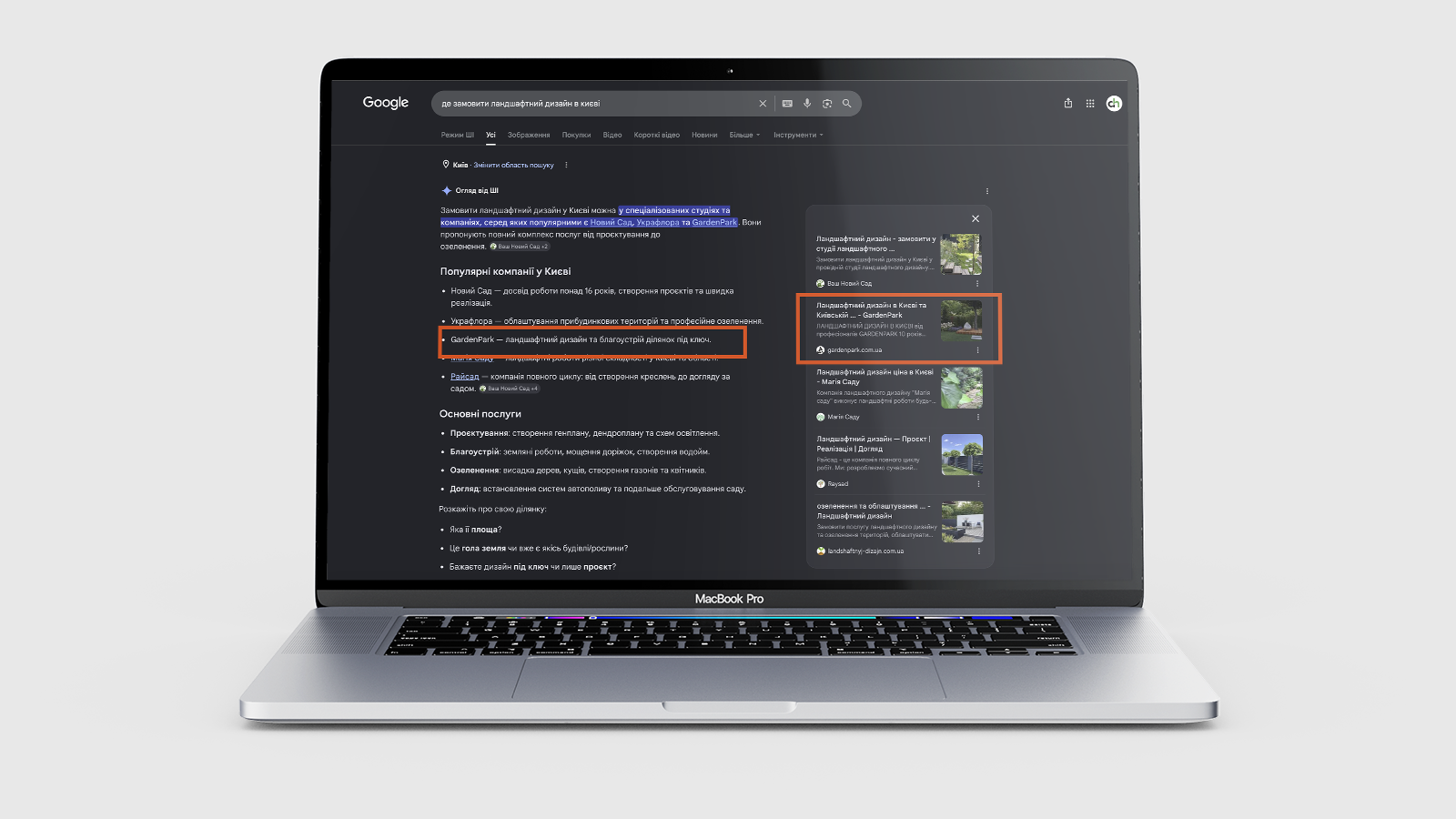
Query without a click
A query like “which company does landscape design in Kyiv” delivers a ready recommendation without visiting any site. Those not in the answer simply don’t exist for that user.SEO’s blind spot
A site can hold top positions in Google while never appearing in a single AI answer. The reason: content is built for classic ranking algorithms, not for the logic AI uses to generate text.Early window of opportunity
Competition in AI channels is still lower than in classic SEO. By 2027 entry will be more expensive and slower — neural networks will have already established trusted sources in your niche.What is included in the GEO promotion service
The service covers technical audit, content optimization, digital PR and authority building, monitoring and reporting — four directions that together build brand presence in AI answers.
Technical block
SEO-GEO audit: technical status, URL structure, speed, schema markup, accessibility for AI bots. Internal linking and meta tag optimization. Forced re-indexing of updated pages. Google Search Console monitoring.Content block
Semantics tuned to the logic of generative answers. AI-friendly structure: headings, FAQ, tables, clear definitions. Content adaptation for E-E-A-T — authorship, verified facts, external links.Digital PR & authority
External brand mentions on niche platforms. Crowd-marketing in forums and niche communities. Building brand entity in the Knowledge Graph — so AI models recognize your company as an authoritative source.Monitoring & reporting
Tracking brand appearances in AI Overviews, ChatGPT, Gemini, Copilot, Perplexity. Monthly report with GEO visibility and technical status breakdown. Strategy adjusted after every algorithm update.The starting point is a free GEO audit. It shows the real state of your site and provides a clear work plan — before any commitments.
Visibility in AI Overviews, ChatGPT, Gemini, Copilot, Claude and Perplexity
Visibility works differently across AI platforms. Some actively cite sources with links, others produce short summaries. GEO for each platform is separate work with different priorities.
Google AI Overviews / AI Mode
Extracts fragments from indexed pages and shows source links. What matters: Schema.org, structured answers, E-E-A-T, domain authority.ChatGPT (with search)
Browses pages in real time and cites URLs. What matters: clear headings, short direct answers, presence in authoritative external sources.Perplexity
Actively cites sources with links — closest to classic search. What matters: factual accuracy, unique data, clean HTML without excessive JavaScript.Gemini
Relies on the Google index, Knowledge Graph, and brand authority. What matters: entity in Knowledge Graph, structured data, NAP consistency.Copilot
Uses the Bing index, supports citation. What matters: Bing indexation, Open Graph, clear meta tags.Claude
Primarily without search; cites when web access is enabled. What matters: domain authority, presence in third-party publications and authoritative media.Step-by-step GEO strategy plan for your site
A GEO strategy consists of six sequential steps: from audit to stable monitoring of your brand presence in AI search.
GEO Audit
We check how AI systems currently read your site: structured data, E-E-A-T signals, accessibility for AI bots. The output is a prioritized plan of specific changes.
Topical analysis for GEO
We look at which queries competitors already appear for in AI answers, and where there is a gap for your brand. We define priority AI channels, target queries, and user intent clusters.
Technical optimization
Schema.org implementation, fixing page structure, FAQ markup, page speed. Removing barriers to AI agent indexation.
Content edits
We adapt content to the logic of fragment extraction: clear answers, proper heading hierarchy, factual density.
Authority building
External mentions, Digital PR, publications on authoritative resources. Building brand entity in the Knowledge Graph.
Analytics & monitoring
We track brand appearances in AI answers via GA4, GSC, and specialized tools. Monthly report — citation dynamics, AI-channel traffic changes.
Exact timelines depend on three factors:
→ Site starting point — how ready the technical foundation and current SEO are.
→ Niche competition — medicine and finance are harder than niche B2B services.
→ Target AI channels — Google AI search connects slower than open AI chats.
We give an accurate estimate on a free 30-minute call.
Technical signals affecting GEO visibility
Technical site status does not push it into AI answers — but technical barriers most often prevent generative systems from reading the page. That is why GEO audits start here.
Indexation & canonicals
AI systems rely on the Google index. Pages outside the index or with incorrect canonicals simply do not exist for generative search.Schema markup (JSON-LD)
Structured data give the model a precise answer: what brand this is, what it offers, where it is located. FAQPage, HowTo, Article, Organization — mandatory GEO minimum.Clean HTML structure & H1–H3
Generative systems read text hierarchy to determine the page topic and extract specific facts. Question-style subheadings — the format LLMs choose first.Speed & Core Web Vitals
Slow rendering limits crawl depth. If an AI bot did not load the page — the content is not read.Internal linking
Shows AI which pages are key for the topic. Proper internal link structure boosts the authority of topical clusters.LLMs.txt & robots.txt
llms.txt describes what content you allow AI systems to use. robots.txt controls access for all bots. Confusing them is dangerous: a section blocked in robots.txt becomes invisible even to Google AI Overview.Common mistakes that keep brands out of AI answers
Brands fail to appear in AI answers for specific reasons: weak content structure, anonymous authors, duplicates, technical blocks, lack of external mentions.
Vague statements
An LLM will not extract a clear answer from a paragraph without concrete claims. Short 40–80 word blocks with a direct answer in the opening words are needed.
No authorship
Content without E-E-A-T signals (author, title, profile) is treated as anonymous by models, which trust it less. Authorship is mandatory in GEO optimization.
Duplicated content
Identical blocks across multiple pages lower priority for all of them. AI models avoid citing duplicates.
Outdated content
Old publication dates and lack of updates signal irrelevance. LLMs prefer fresh sources when forming answers on current topics.
AI bots blocked
Incorrect robots.txt or missing LLMs.txt block scanner access. If an AI bot cannot read the page — it does not exist for generative search.
Lack of external mentions
Without digital PR the brand does not appear in sources that LLMs consider authoritative. GEO without external signals is half a job.
GEO complements SEO — technical foundation, content, and links remain the base, but GEO adds machine readability. A site with strong SEO but no GEO risks losing traffic even from top-3 positions as AI answers push traditional results below the click point.
GEO promotion for different site types
GEO promotion works best for sites with explanatory content, complex decisions, and long purchase cycles. Each business type requires its own scenario.
E-commerce
Key pages: categories, product cards, comparison blocks. AI cites specifications, advantages, “which is better” answers. KPI: appearing in AI comparison answers.Local business
Key pages: service pages, geo-queries, FAQ. AI cites address, hours, reviews, service description. KPI: citation in local AI answers.B2B / SaaS
Key pages: case studies, solution pages, industry articles. AI cites expert definitions, solution comparisons. KPI: brand in answers to professional queries.Niche projects
Key pages: glossary, guides, analytics. AI cites unique data, proprietary methodologies. KPI: cited as primary source — early window of opportunity.How we measure GEO effect and what we include in the report
Some metrics appear immediately — indexation changes or new AI Overview queries in Search Console. Others build gradually: stable brand share of voice or conversions from AI channels accumulate over time.
Whether AI cites your site and in what context — positive, neutral, with or without a link.
Share of topics where your brand appears in AI answers compared to competitors.
Actual visits from ChatGPT, Perplexity, and other AI services to your site.
Leads and target actions that came specifically from AI platforms — tracked with UTM parameters.
Coverage of indexed pages, crawl errors, new queries from AI Overview.
How much does GEO promotion cost and what affects the budget
GEO promotion has no fixed price — it depends on site size, technical status, content work volume, and audit and monitoring needs. A correct budget can only be calculated after analysing the project.
Starting analysis of site AI-readiness
- Technical status, indexation, crawlability
- Schema.org and JSON-LD coverage
- Starting AI visibility in ChatGPT, Perplexity, Gemini
- Prioritized change plan
Not monthly — a one-time GEO foundation
- Schema.org and JSON-LD implementation
- Page structure and H1–H3 fixes
- Speed and Core Web Vitals optimization
- robots.txt and LLMs.txt configuration
Content edits, monitoring, external signals
- Content edits and new LLM-optimized materials
- Brand mention monitoring in AI answers
- External mentions and Digital PR
- Monthly detailed report
First we do the GEO audit — free on the first step. After the audit it becomes clear: how many pages need work, what volume of content changes is required, and what to invest in the first month versus later months.
Why trust GEO promotion to Chyzh Agency
Figuring out GEO on your own means months of experiments. The agency has already gone through this on real projects and works immediately with what delivers measurable results — no trial and error at your expense.
14 years & 50+ projects
Chyzh Agency has been operating since 2011: 50+ projects in 18 countries, official Google partnership. Listed on it-rating.ua and Clutch with verified client reviews. GEO/AEO is a dedicated priority direction.
Specialized GEO team
GEO projects are handled by a dedicated pair: Dmytro Popryadukhin (Head of SEO) covers semantics, technical audit, and strategy — the content team handles Schema markup in parallel. The client gets one unified process.
Measurable results from day one
We build the brand’s “machine identity” through schema, Knowledge Graph entities, and entity-dense content. Brand appearances in ChatGPT, Perplexity, and Google AI Overview answers are tracked from day one.
Opinion from the specialist leading your practice
“In my years in SEO I have seen four major algorithm shifts: Google Hummingbird (2013), Google RankBrain (2015), Google Medic Update concept (2018), Google I/O (2026). Only in GEO does changing 5% of content lift visibility by 40%. No other channel delivers such returns — and this window of opportunity will not stay open forever.
 Dmytro PopryadukhinHead of SEO Strategy · Chyzh Agency
Frequently asked questions about GEO promotion
When do the first GEO results appear?
First signals — proper structured data indexation, brand entity in Knowledge Graph, GSC metric changes — are visible within 2–3 months. Stable brand citation in AI answers forms over 6–12 months. The horizon is similar to SEO but the logic is different: reputation in the eyes of models, not rankings.
Does GEO guarantee appearing in AI Overviews?
No, and no honest agency gives that guarantee. Google AI Overview and ChatGPT independently decide what content to cite. GEO work increases the probability of appearing — correct E-E-A-T signals, Schema.org markup, authoritative external mentions, clear topic structure.
Does GEO require new content?
Not necessarily from scratch. Often restructuring existing content is enough: add FAQ answers, explicitly name the author and date, mark entities via JSON-LD, shorten paragraphs to 2–3 sentences. New content is warranted where the brand does not cover topics that AI already cites from competitors.
Do external mentions and site speed matter for GEO?
Yes. LLM models trust sources frequently mentioned on authoritative platforms — media, professional forums, industry directories. Speed determines whether an AI bot can even index the page: if the response did not load, the content is not read.
How to combine SEO and GEO in one strategy?
Semantic core, technical site status, and link profile are the shared foundation. Then paths diverge: SEO optimizes for SERP ranking, GEO — for machine understanding and citation. Part of the work runs in parallel, priority is set by the current site state: technical base first, then the LLM content layer.
Does GEO replace SEO or complement it?
GEO does not replace SEO — it complements it. SEO handles Google positions and drives click traffic. GEO works one level up: the brand appears inside the AI answer. No solid SEO foundation — GEO signals weaken. No GEO layer — the site gradually loses the audience migrating to AI search.
Ready to put your site inside AI answers?
A free GEO audit and 30-minute call — your site’s real status, a clear work plan, and a 90-day roadmap. No commitments.