
Flutter app development services: one codebase for iOS and Android
Flutter is when one developer writes one codebase for both platforms at once. Around 30% saved on budget and time versus native development, with no visible loss of quality. We’ve worked with Flutter since its first releases. One of the strongest stacks for business apps in 2026.
What is Flutter app development?
Flutter is Google’s framework for building apps. Instead of two separate codebases (Swift for iOS, Kotlin for Android) you write one codebase in the Dart language that runs on both platforms. So one developer does the work of two.
Flutter renders its own interface, so the app looks and behaves the same on iOS and Android, while performance stays close to native (85-95%). Google Pay, eBay, BMW, Alibaba and thousands of business apps are built on it. For most business tasks it’s the optimal balance of cost, speed and quality.
Who Flutter app development suits best
Flutter is the right choice for most, but not for everyone. Here’s where it delivers the most. It’s one part of mobile app development — we pick the stack that fits the job.
B2B SaaS and internal tools
Business logic, forms, dashboards, integrations. Native performance isn’t needed here, and budget savings are critical.MVP and hypothesis testing
You need to reach both stores fast and cheap to validate demand. A Flutter MVP — in 4-8 weeks.E-commerce apps
Catalogue, cart, payments, profiles, push. No heavy graphics needed — Flutter is ideal.Startups on a tight budget
One codebase = one team = lower long-term cost of maintaining both platforms.Products where consistency matters
When the app must look and behave identically on iOS and Android — Flutter gives that out of the box.Fintech, banking and crypto
Security comes from architecture, not the language — so banks, wallets and crypto build confidently on Flutter. One codebase instead of two means fewer bugs in a critical system. Examples — Nubank, Google Pay, PrivatBank.When Flutter is NOT the fit:
- AR/VR;
- heavy games with complex 3D graphics;
- apps with intensive background processing or direct hardware integrations.
A separate case — when you only need one platform: then native is no more expensive and Flutter gives no saving.
In genuinely native cases we recommend native iOS or Android — and we’ll say so honestly at discovery.
Flutter vs native: short and honest
Swift + Kotlin
One codebase (Dart)
What’s included in Flutter development
Flutter architecture
Clean architecture, state management (Bloc / Riverpod), modularity — code that scales with the product.Cross-platform UI
One interface for iOS and Android adapted to each platform’s guidelines. Material + Cupertino.Backend + integrations
REST API, databases, Firebase, payments, push, geolocation, chats, offline sync.Native modules when needed
If access to a specific OS feature is required, we write a native bridge (platform channel). Native flexibility where it counts.Testing
Unit + widget + integration tests, device matrix, performance profiling.Publishing to both stores
App Store + Google Play from one codebase. ASO, moderation handling, launch promo.Flutter projects in production
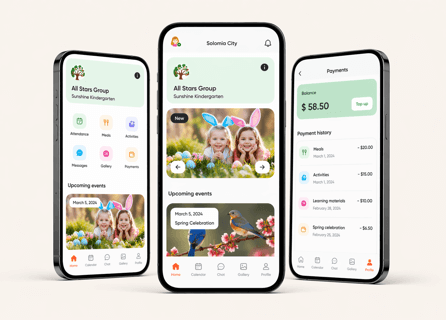
Sadok.app
A cross-platform CRM for nurseries and parents — from architecture to release.
View case →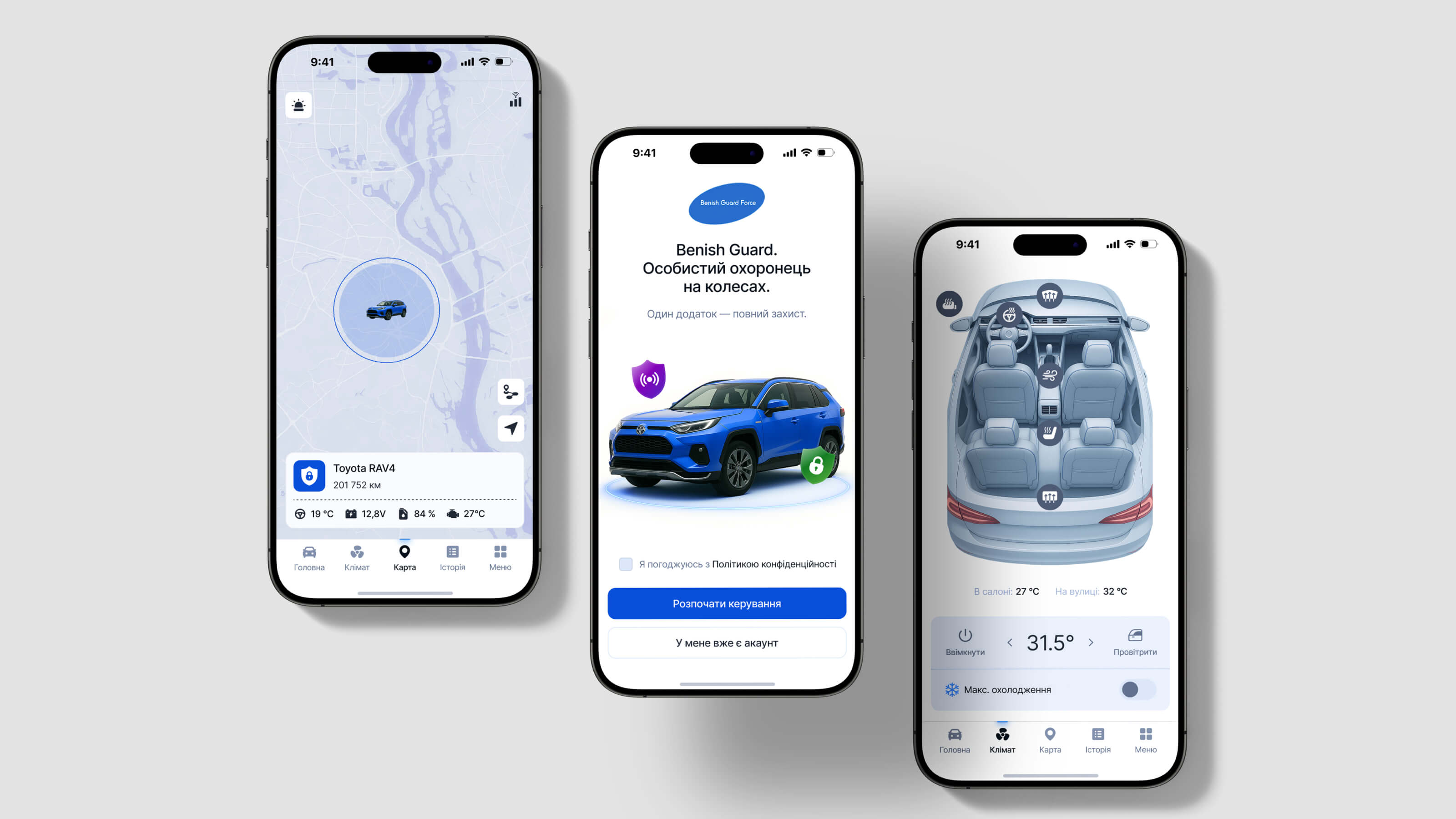
Benish GUARD
A car-monitoring app — real-time GPS tracking and background services.
View case →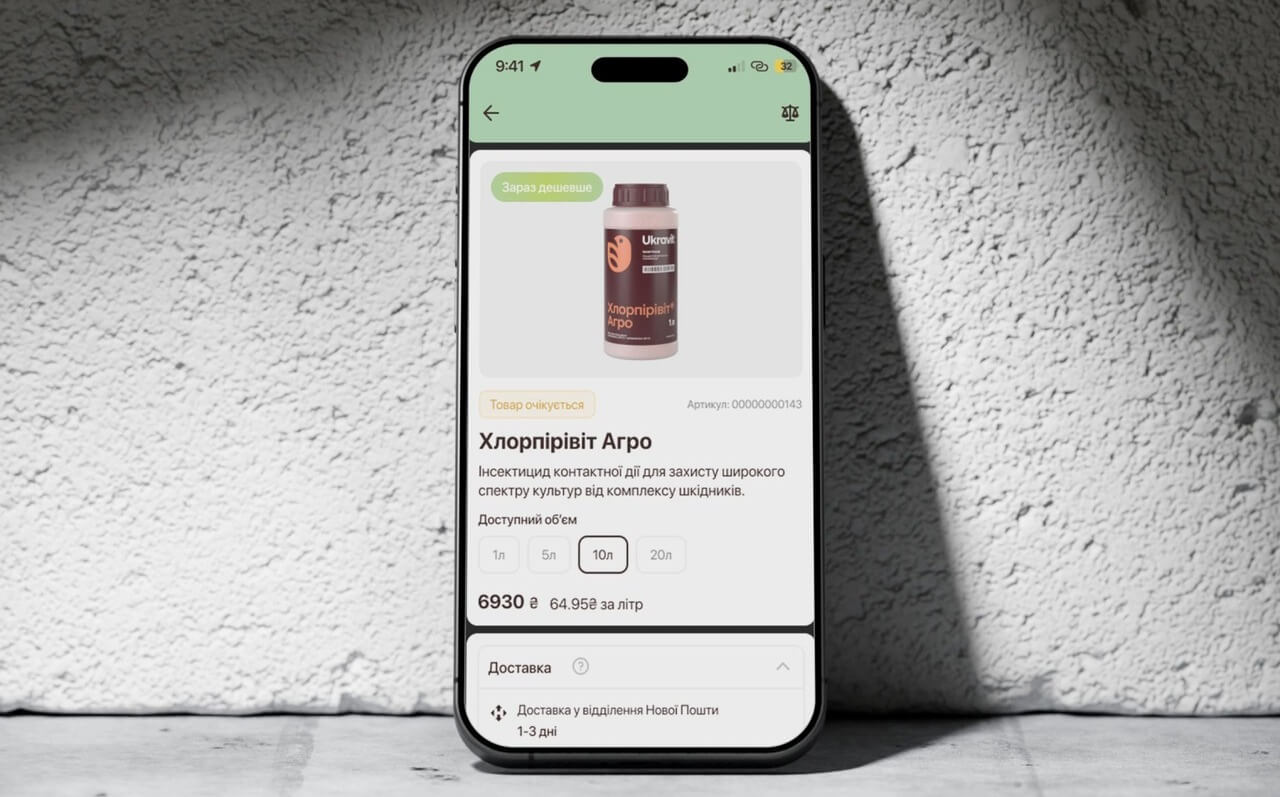
UkrAvit
A B2B app for the agri sector — iOS + Android with backend integrations.
View case →FAQ about Flutter app development
Is Flutter really cheaper than native development?
Yes. Instead of two teams (iOS + Android) one works; instead of two codebases — one. The saving is typically ~30% of budget and time. Maintenance is cheaper too — you update one codebase, not two.
How much does a Flutter app cost?
An MVP is from $3,000. A full product with backend is $5,000-15,000. Our calculator gives an exact range in 2 minutes.
Will users notice the app is built on Flutter?
No. Flutter renders a native-looking interface, animations are smooth (60-120 fps), performance is 85-95% of native. Google Pay, BMW, eBay, Alibaba are built on Flutter — users don’t see the difference.
When is native better than Flutter?
For AR/VR, heavy 3D games, intensive background processing, direct hardware integrations — or when you only need one platform. Fintech, banking and crypto, on the other hand, run perfectly on Flutter — PrivatBank is built on it. In most business tasks Flutter is optimal. At discovery we’ll tell you honestly what fits.
Can a Flutter app later be moved to native?
Individual parts — yes (platform channels let you add native modules anytime). But usually there’s no need: Flutter handles 95% of tasks. Start with Flutter, add native pointwise if required.
A word from a Flutter developer
“15 years of native iOS taught me to see where Flutter delivers 95% and where native is genuinely needed. Most studios are either fanatically against Flutter or slap everything on it. I pick the stack for the job — and in 80% of cases that’s Flutter, because it saves the client money without losing quality.
 Mykola TabuchenkoSenior iOS Developer · chyzh.agency · 15 years iOS · Flutter since first releases · practice led by Serhii Kolodynskyi, Head of Mobile Dev
Not Flutter? See other options
iOS development (Swift) →
Native iOS for AR, heavy games and maximum performance.Android development (Kotlin) →
Native Android for the largest device market.Mobile app development (overview) →
The general page with every technology and the process.Cost calculator →
Estimate your Flutter app’s budget in 2 minutes.Considering Flutter for your app?
A free 30-minute discovery call. We’ll review your product and tell you honestly whether Flutter fits — or whether native is worth it. No commitment.